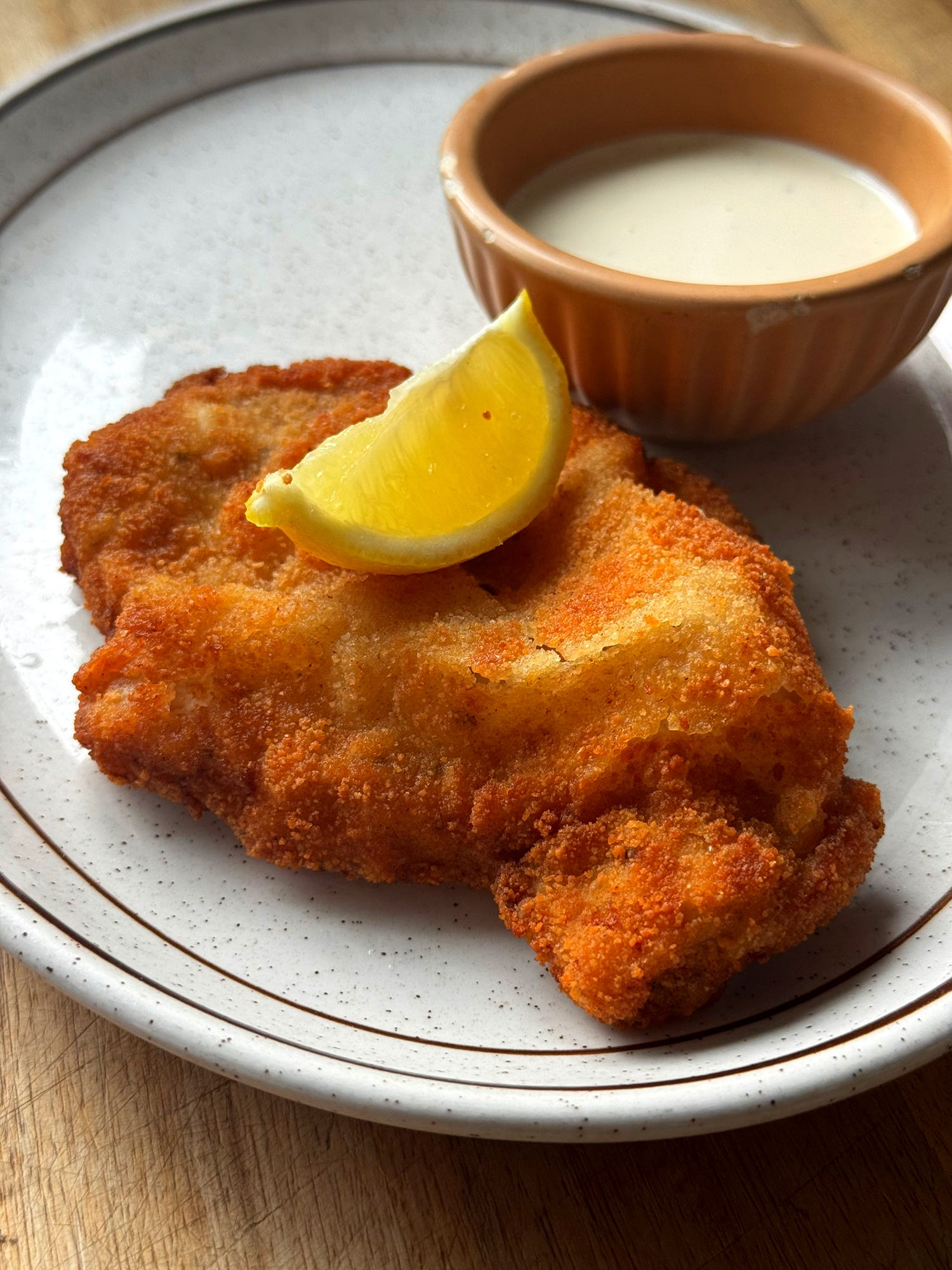
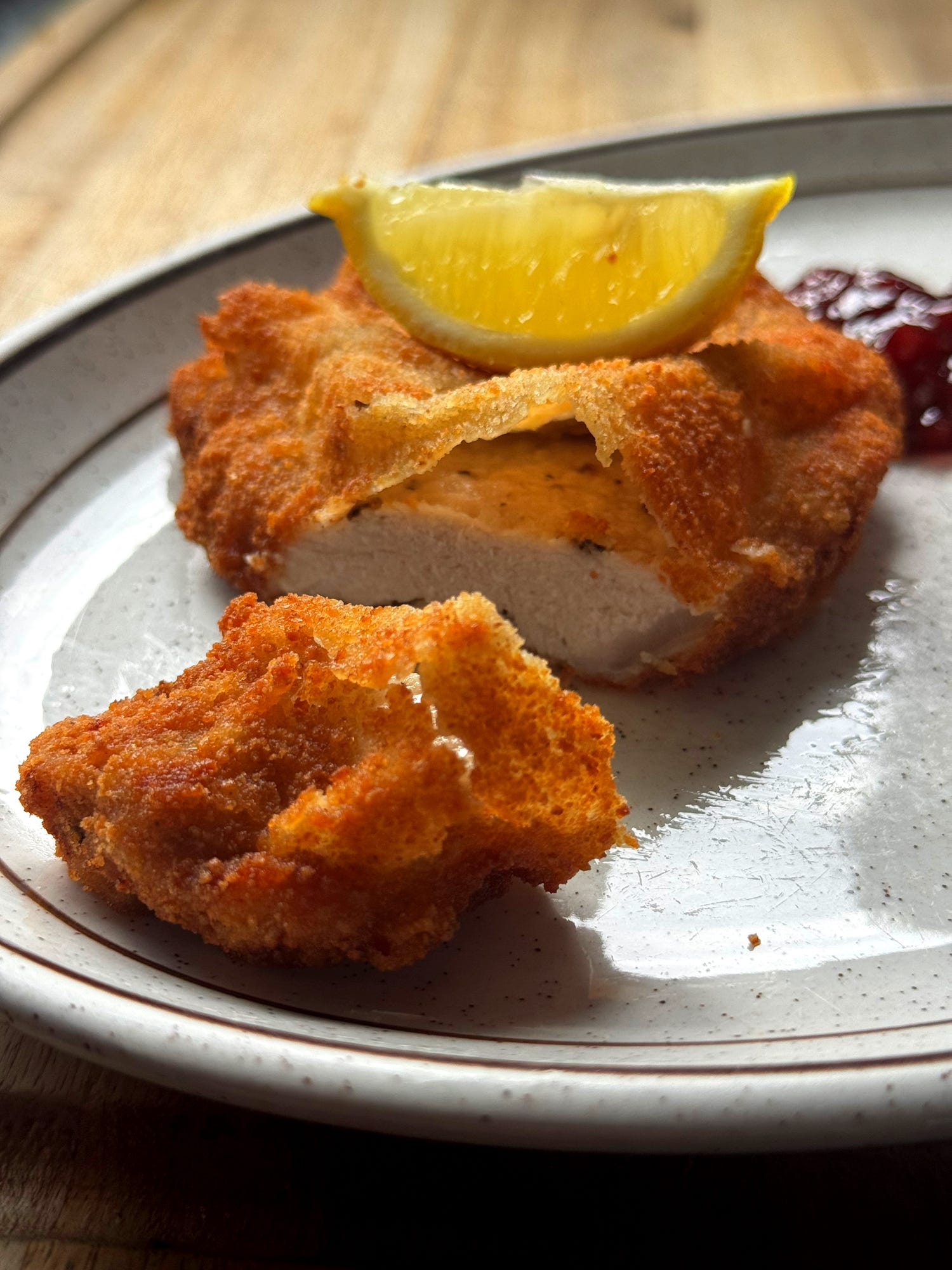
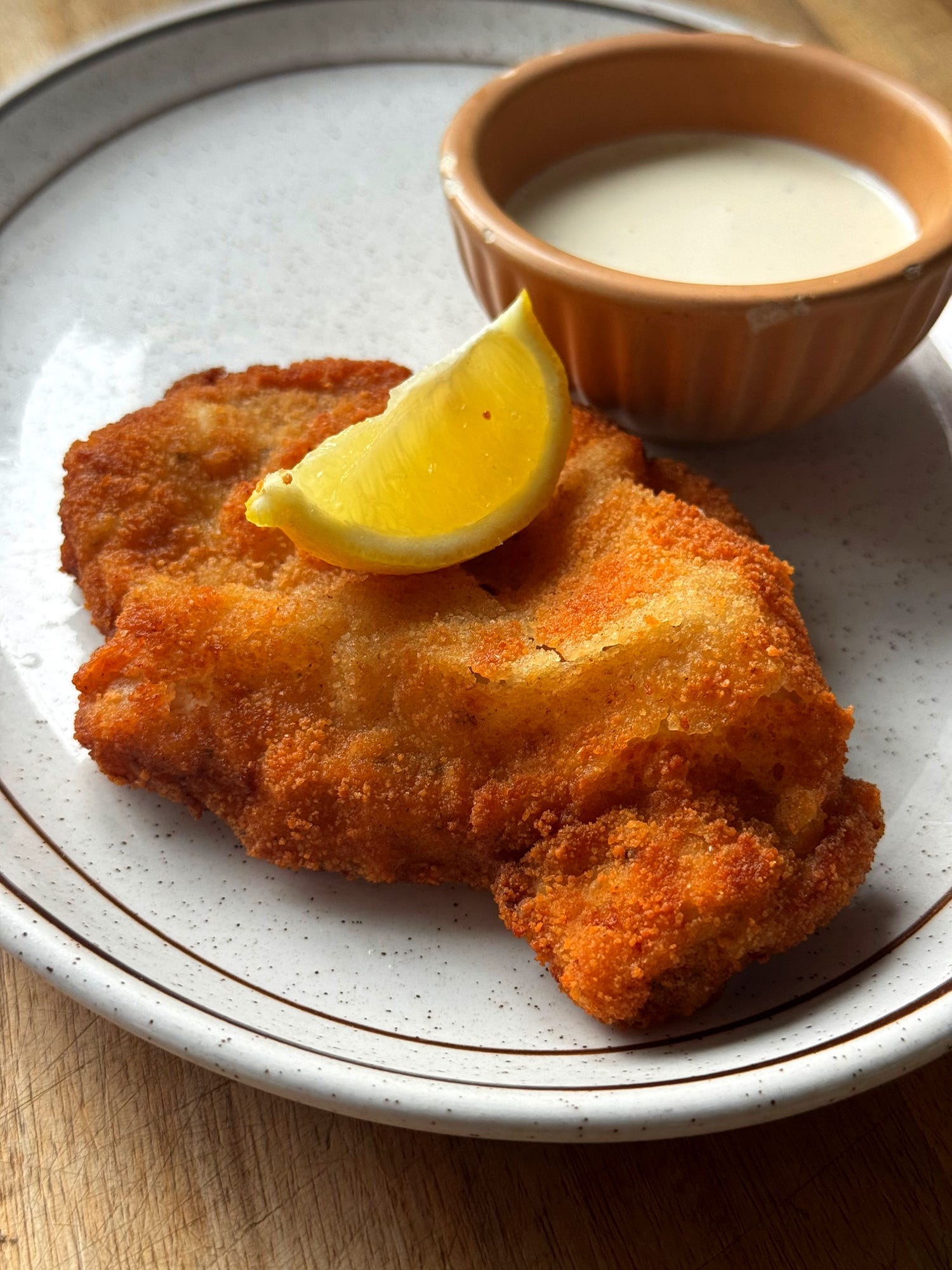
Though often attributed to Germany, the true ‘wienerschnitzel’ actually comes from Austria, where the most famous style reigns supreme in its capital city, Vienna. Most traditional restaurants produce the enormous, spanning plates of schnitzel, the size owing to veal loin, which is classic choice of meat for ‘Wienerschnitzel’. This recipe uses a more approachable alternative, pork or chicken, which can be flattened easily at home provided you use some boneless pork loin chops or chicken breasts. The Viennese are very fussy about their schnitzel breading, and they love their schnitzel to have a bubbly, undulating crust with air pockets between the breading and the meat. The secret to achieving this is adding a little bit of oil to the egg mixture when breading the meat, which adds some elasticity to the coating once its fried. Enjoy this with potato salad, redcurrant jelly, fries or salad, and don’t forget the sour burn of some lemon squeezed over the top. For a quick sauce, I have included a no-cook mustard-cream sauce which some Germans and Austrians prepare at home for schnitzel, and it makes a great, refreshing condiment served alongside. Let’s go!
INGREDIENTS (serves 2x)
2x boneless pork loin chops (thick-cut if possible) or 2x chicken breasts
1 tsp salt
1/2 tsp ground black pepper
3 tablespoons plain flour
1 large egg, beaten
1 tablespoon vegetable oil
100g fine breadcrumbs
approx. 100ml vegetable oil, for frying
MUSTARD SAUCE
3 tablespoons soured cream
3 tablespoons mayonnaise
2 tsps Dijon mustard
1 tsp lemon juice
1 tsp sugar
1/2 tsp salt
1/2 tsp black pepper
WALKTHROUGH
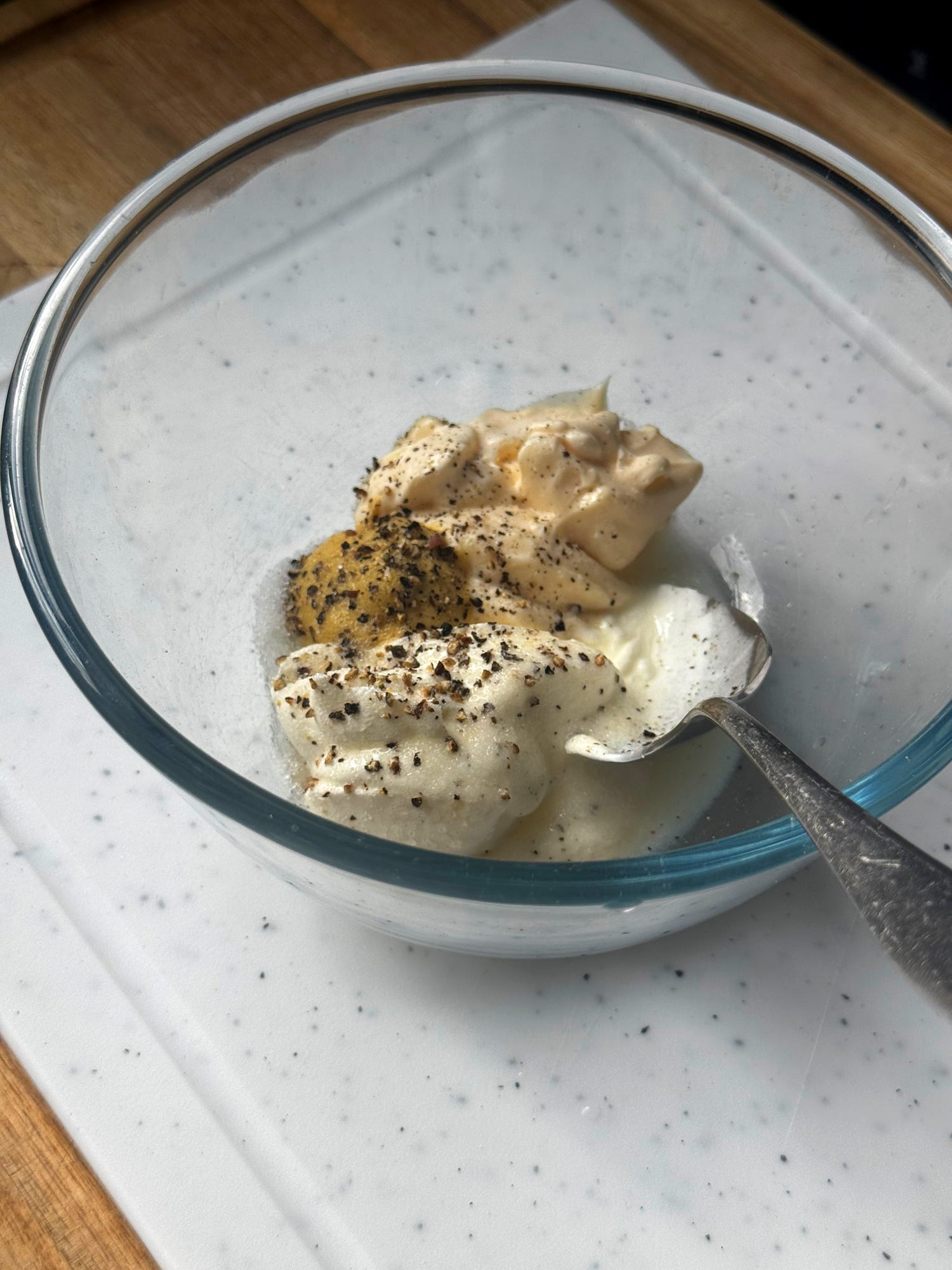
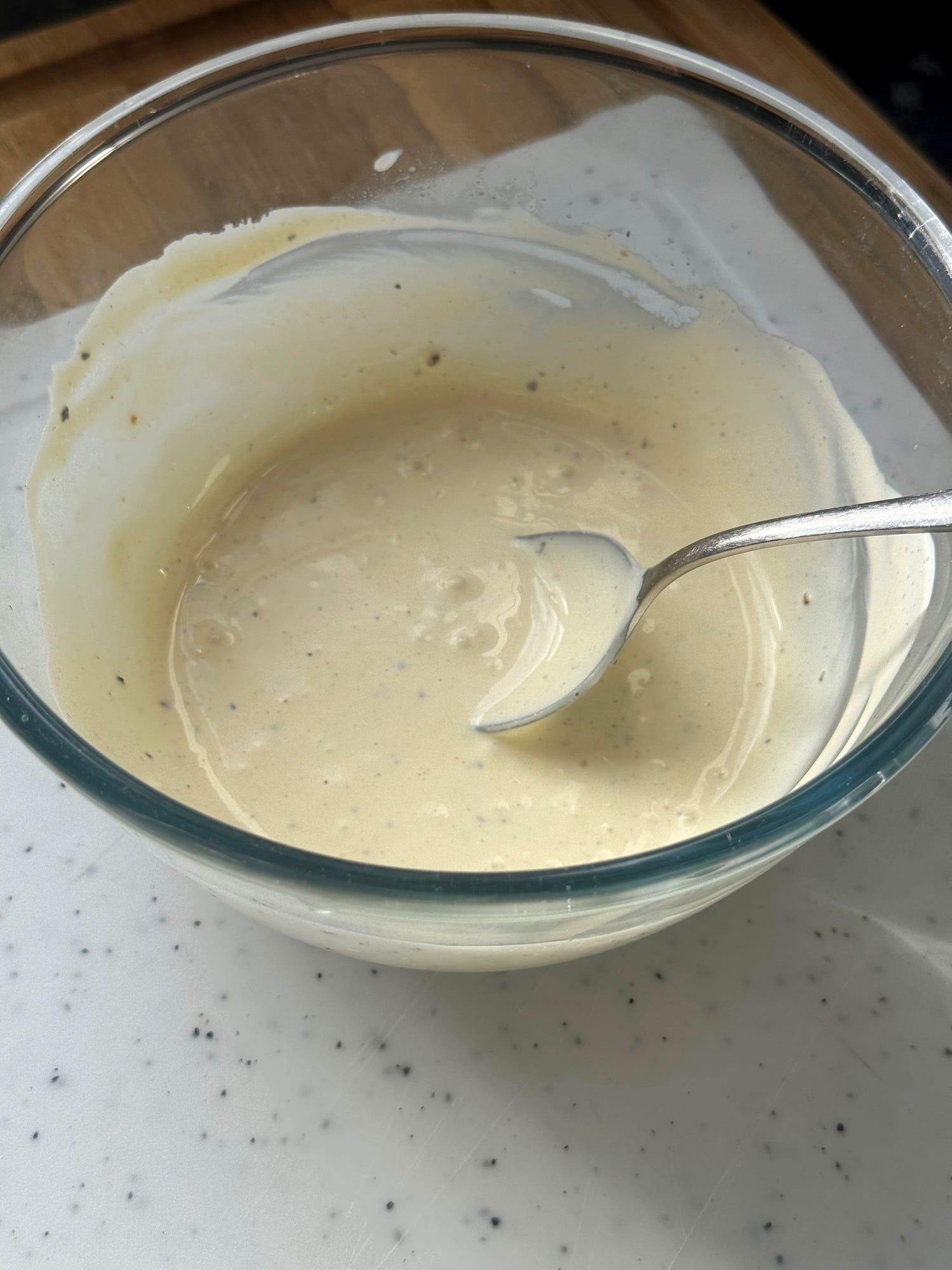
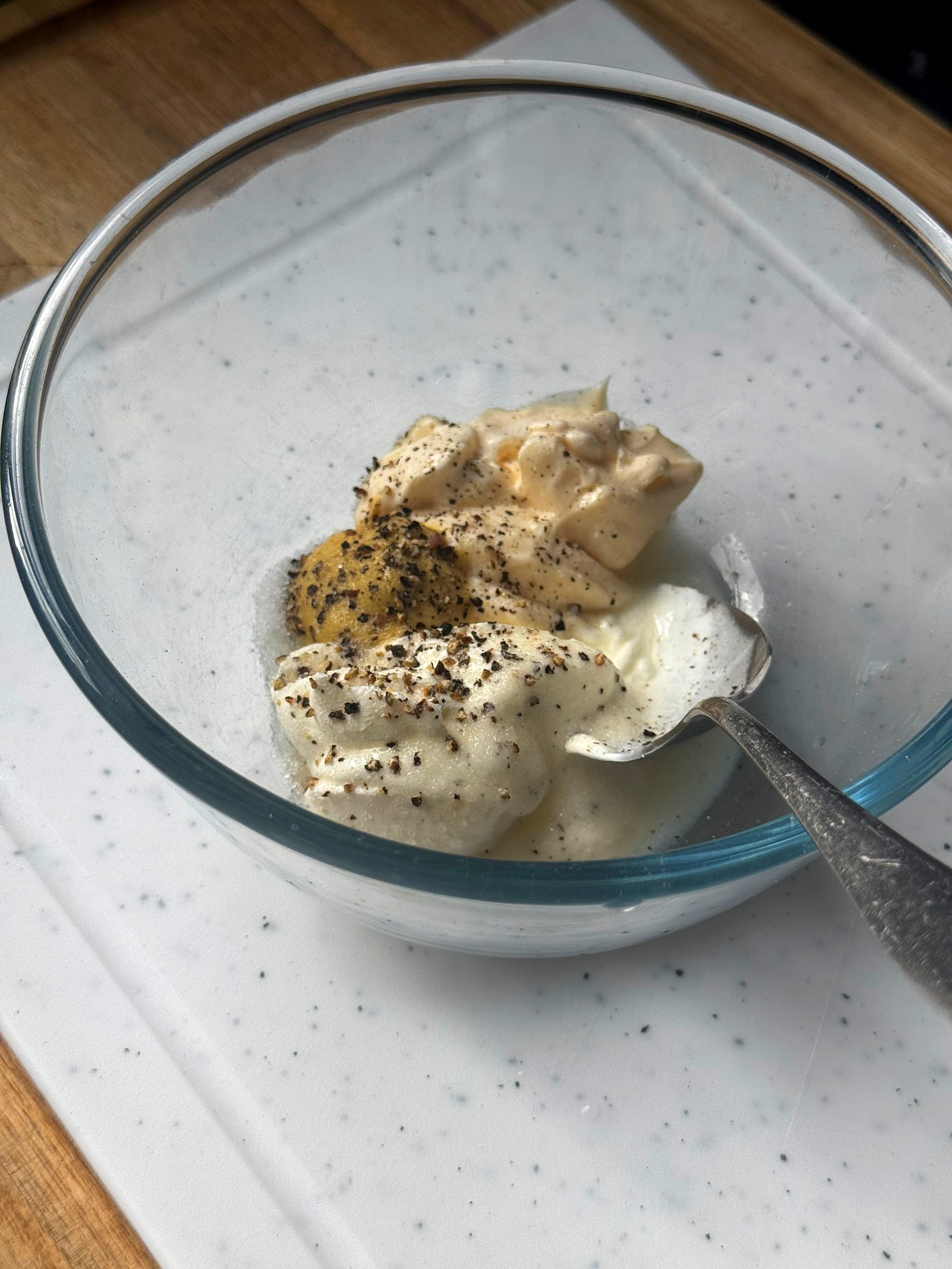
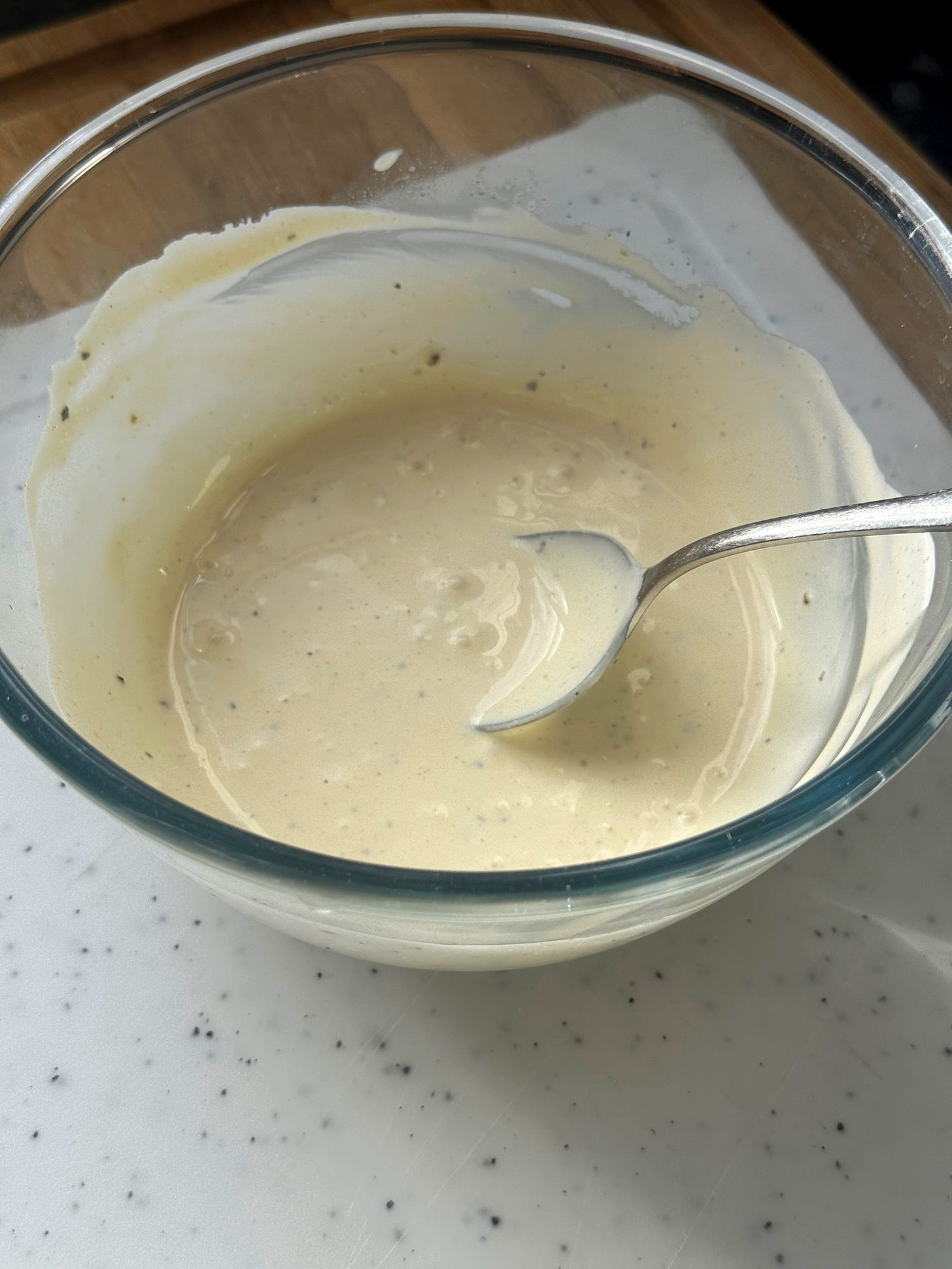
First, let’s make the mustard sauce. In a small mixing bowl, combine the 3 tablespoons soured cream, 3 tablespoons mayonnaise, 2 tsps Dijon mustard, 1 tsp lemon juice, 1 tsp sugar, 1/2 tsp salt and 1/2 tsp black pepper. Mix until you have a smooth sauce. Taste and adjust the seasoning to your preference.
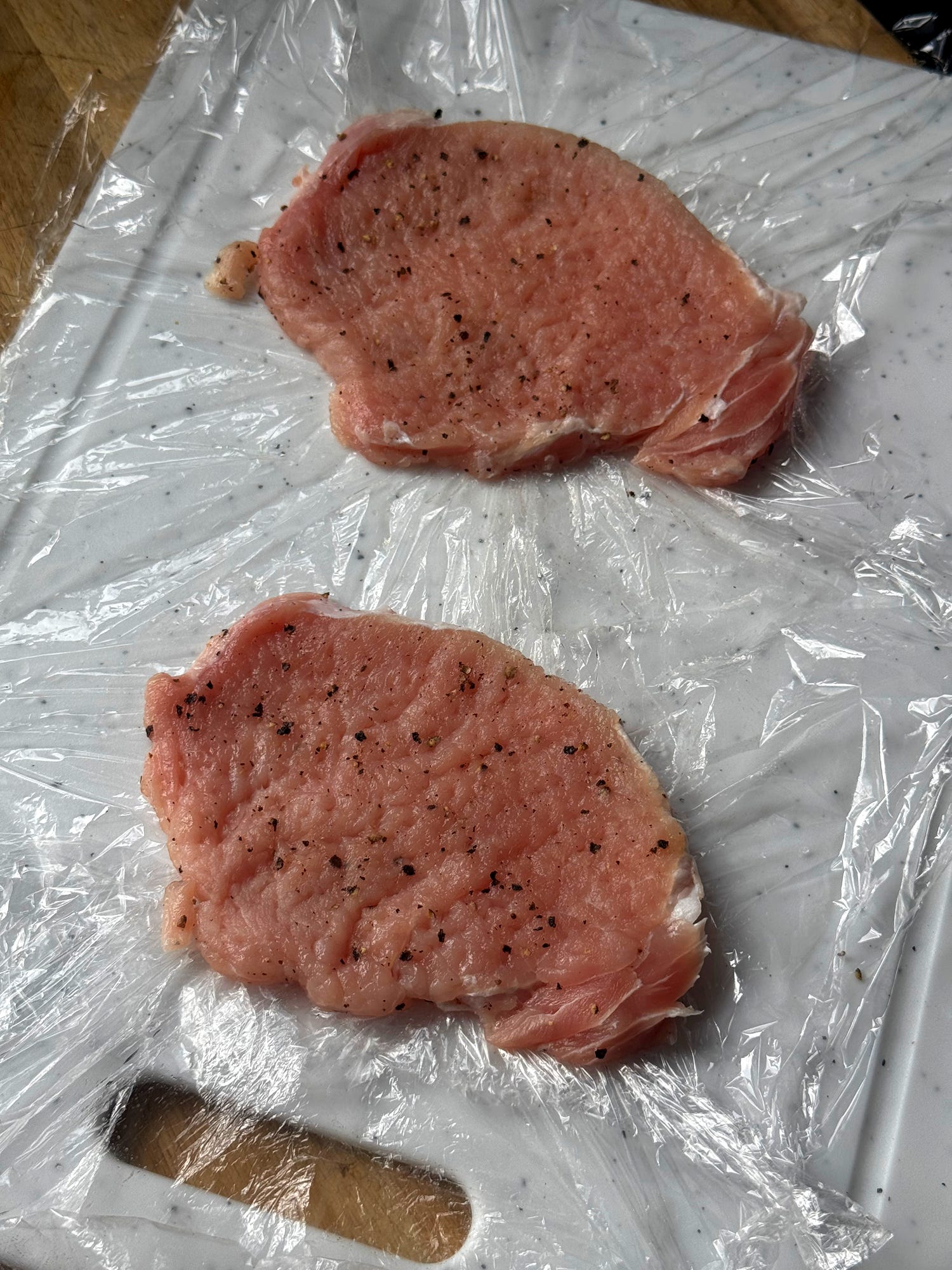
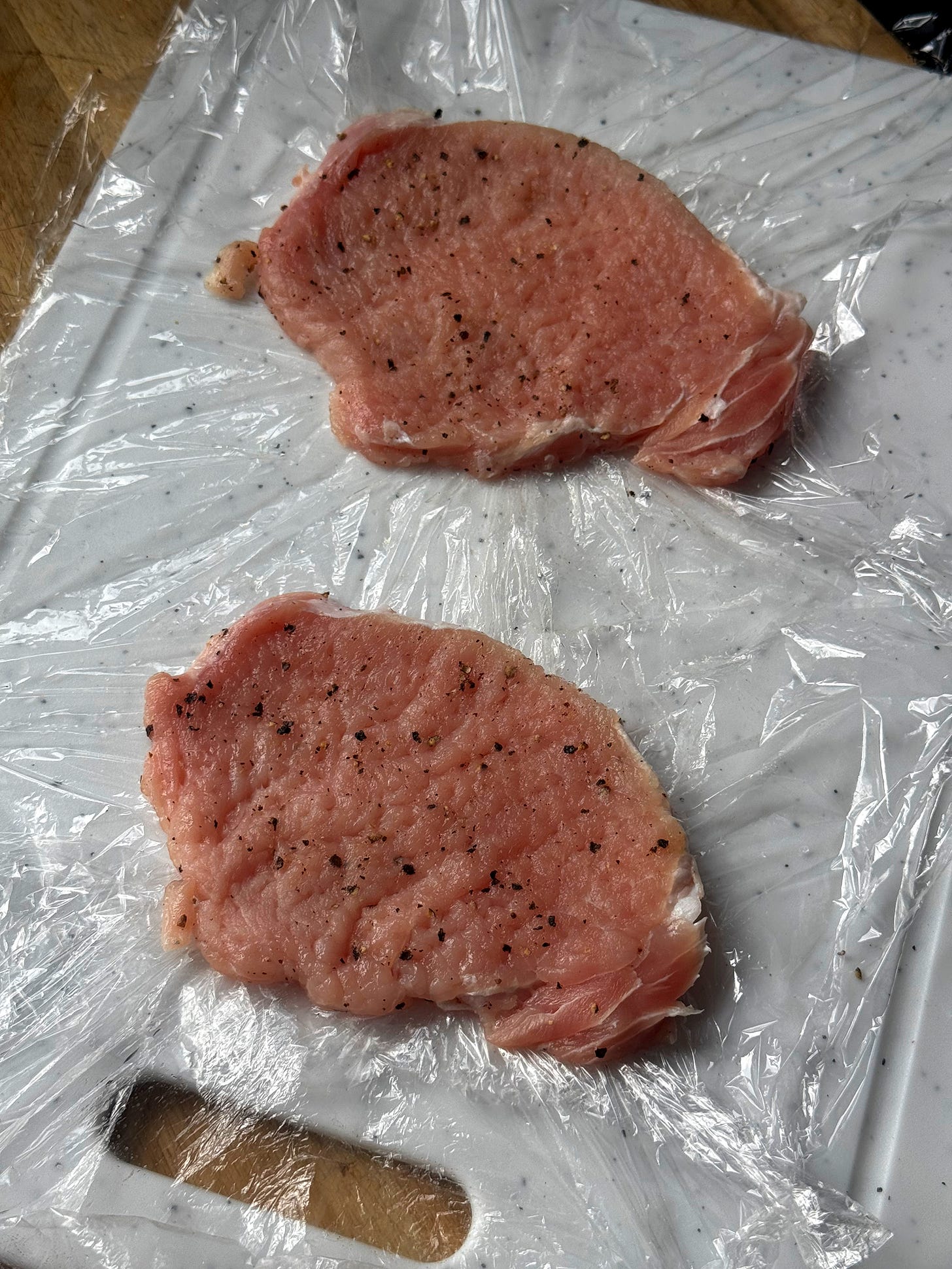
Now let’s tenderise the pork/chicken fillet. Place the pork/chicken onto a piece of cling film and season on both sides with 1 tsp salt and 1/2 tsp of ground black pepper. If using pork chops, cut away all of the fat rind along the side and discard. Cover the pork/chicken with another sheet of cling film. Using a mallet, rolling pin or a heavy frying pan, pound the meat until it spreads out to approximately 1/4 inch thickness. A boneless pork chop will take a little more work to tenderise than chicken breast.
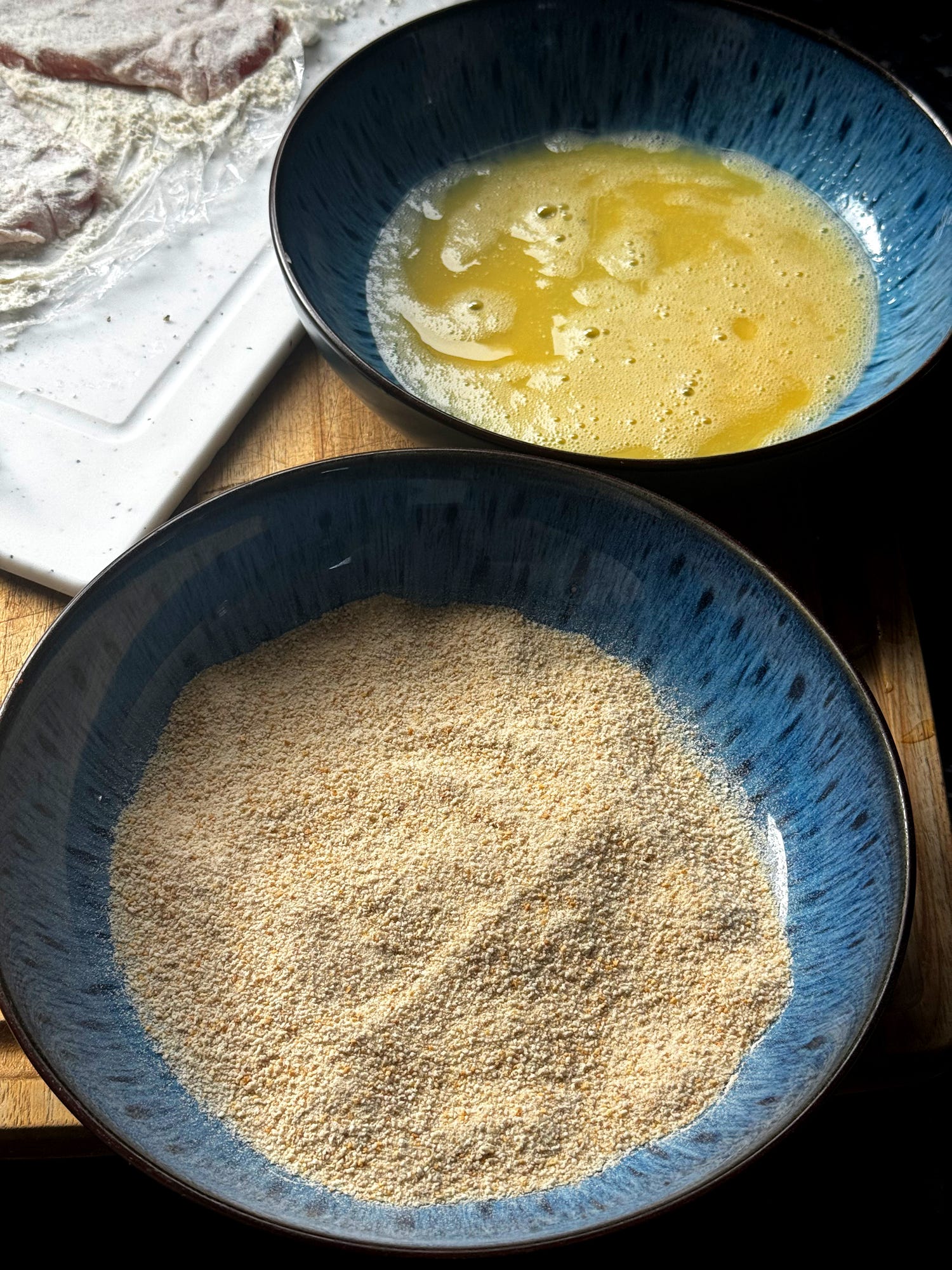
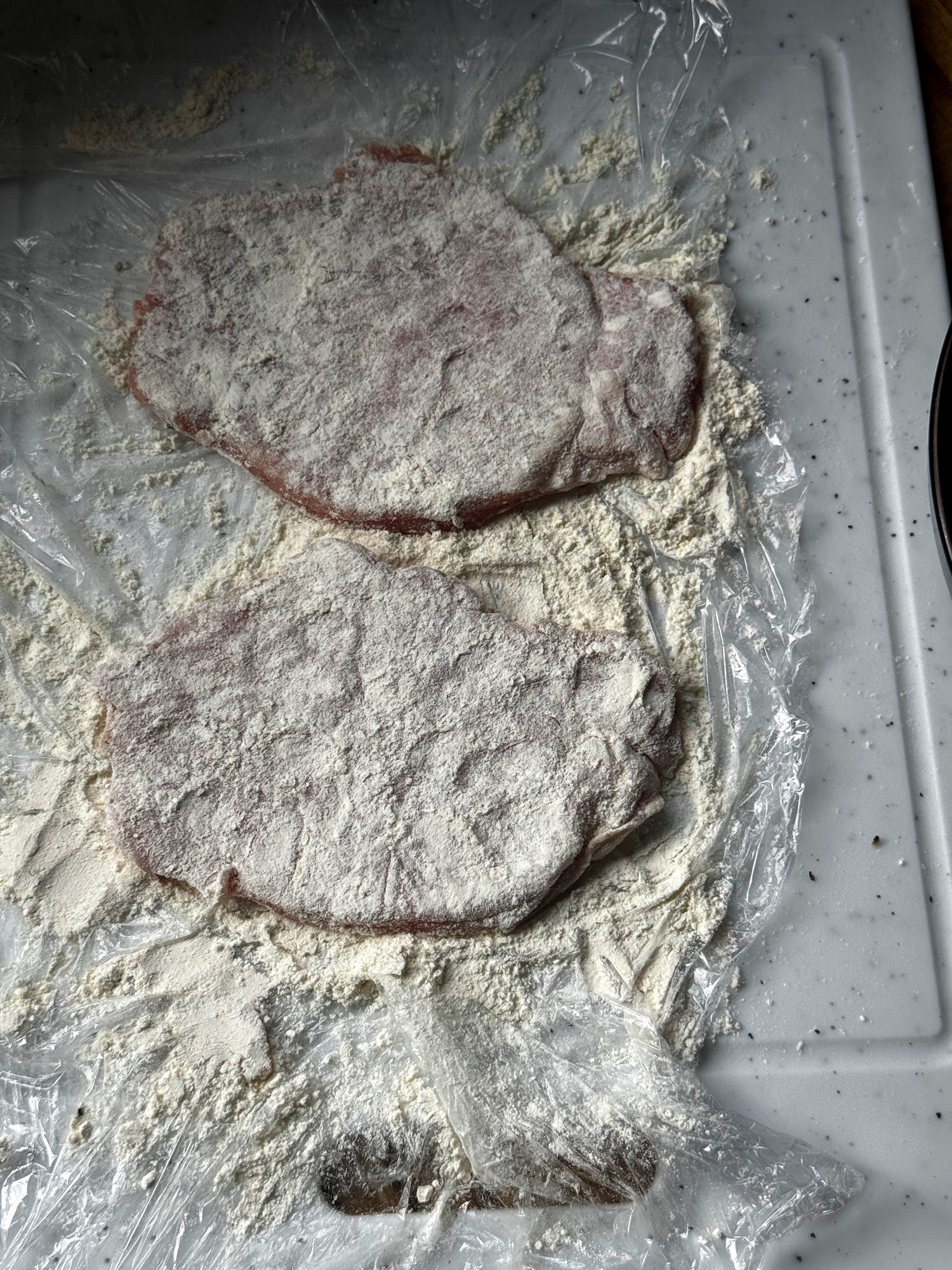
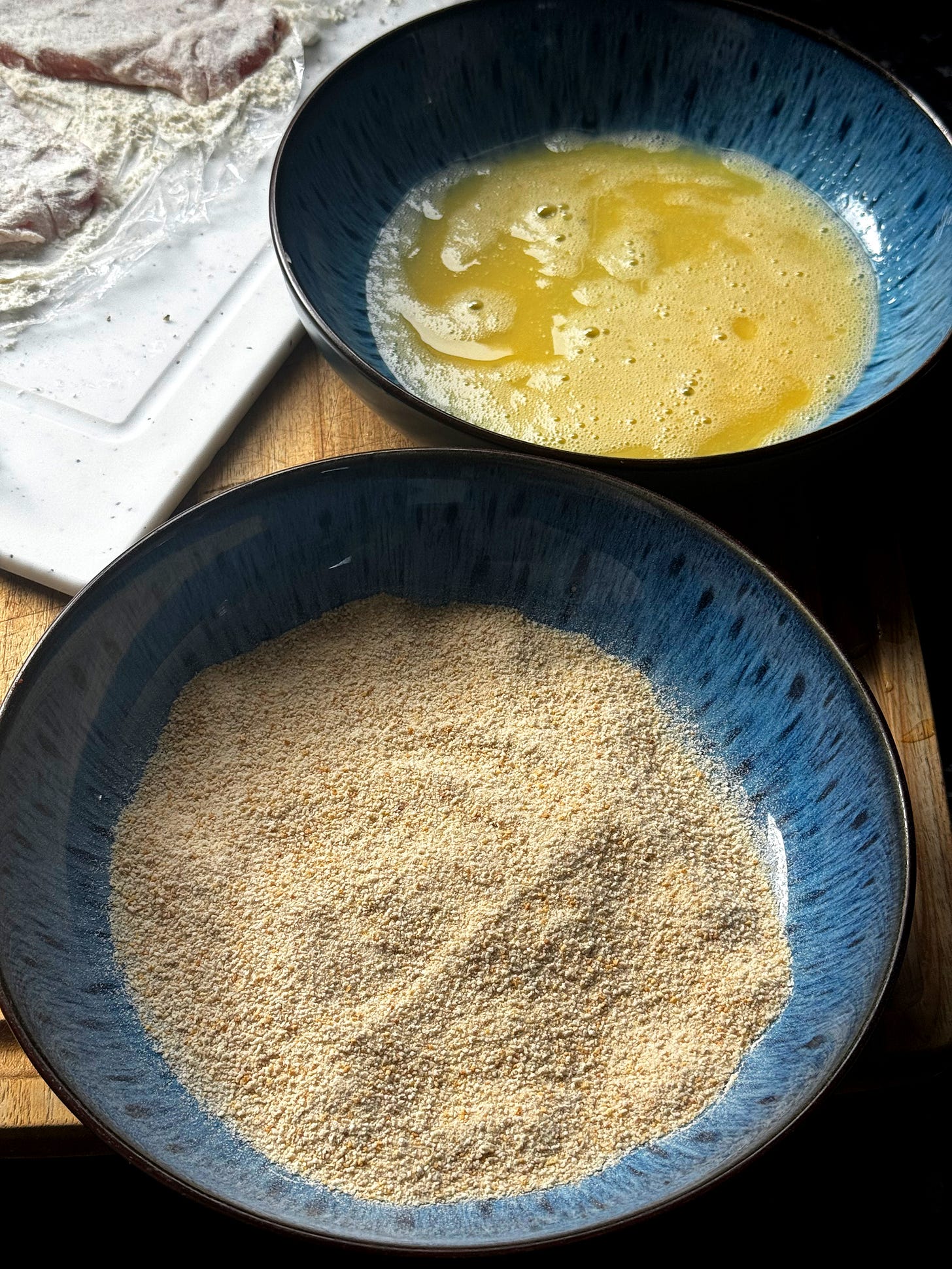
Now let’s prepare the breading stations. Set out two dishes, one containing a 100g of breadcrumbs and the other containing 1x beaten egg and 1 tablespoon of vegetable oil. Scatter the 3 tablespoons of flour over the flattened meat on its cling film wrapper and coat both sides of the meat thinly in flour.
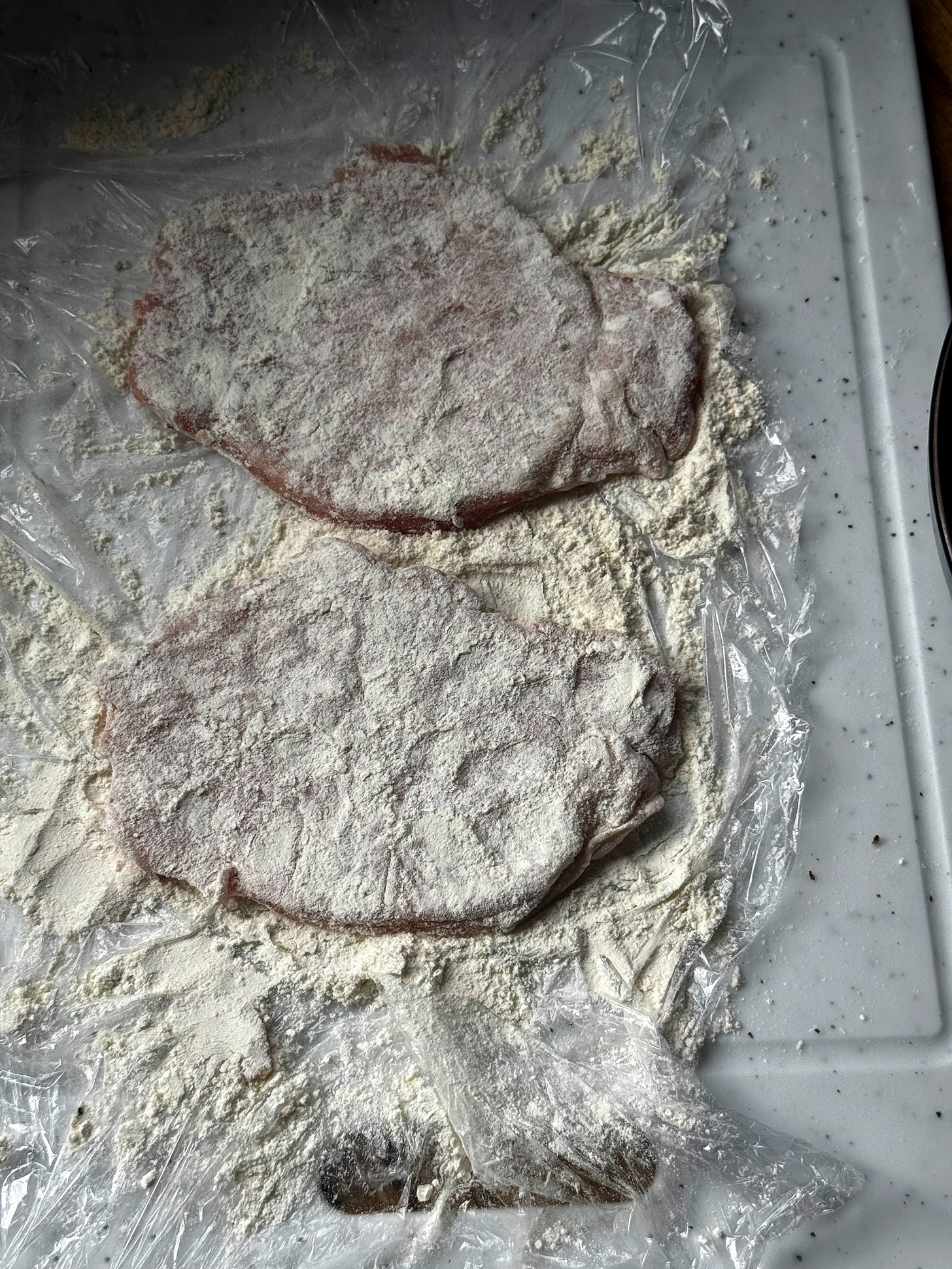
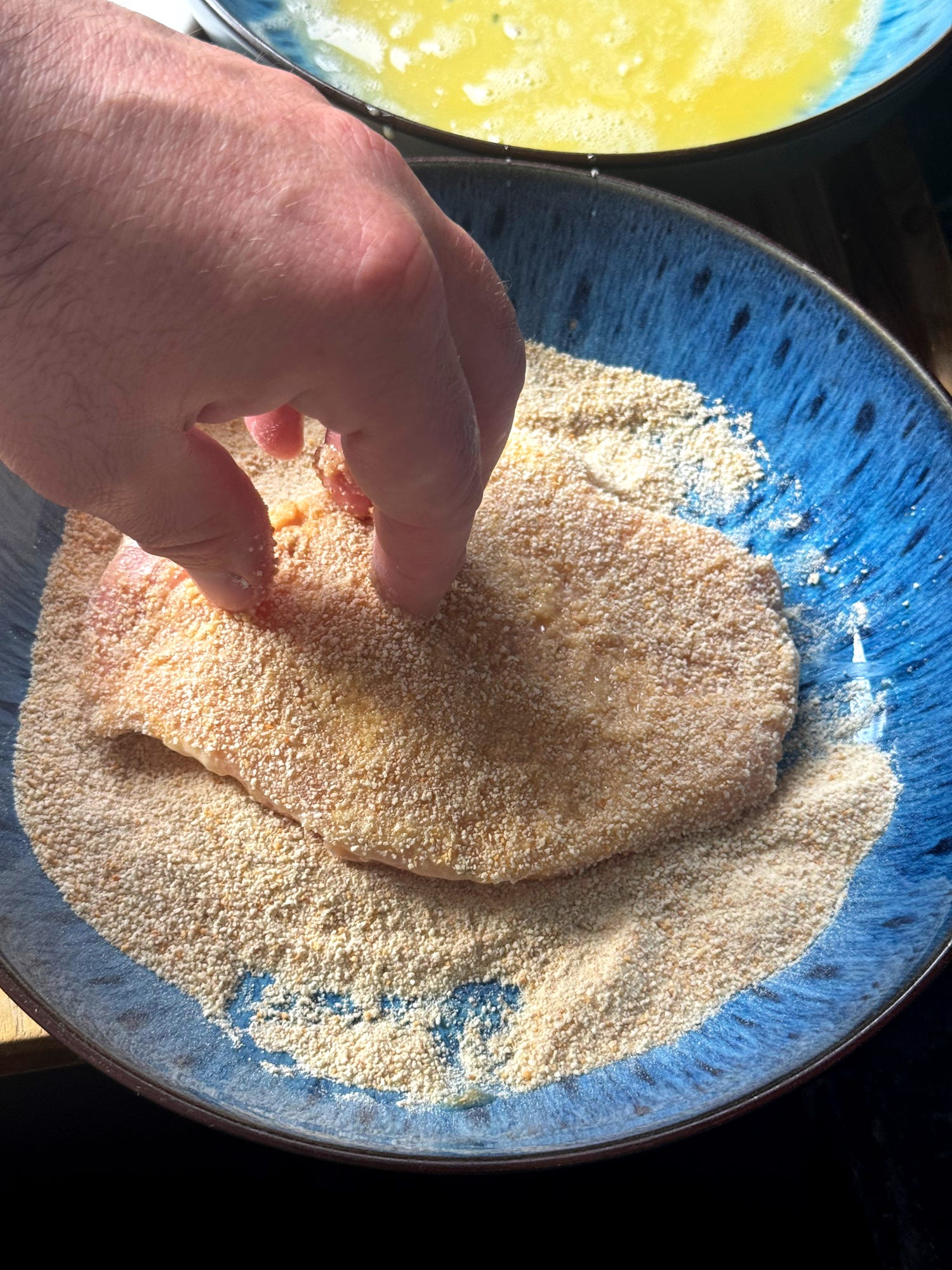
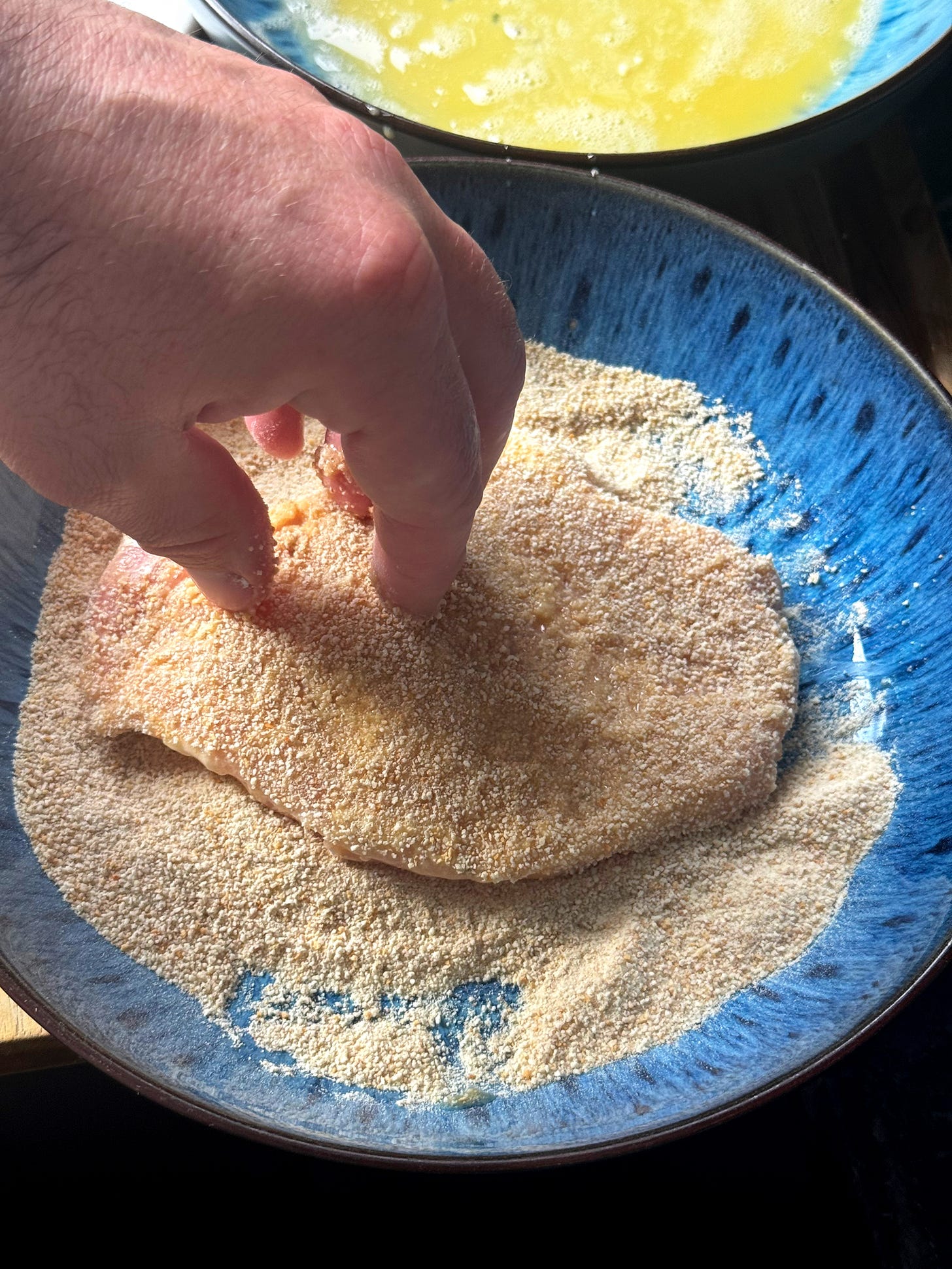
Shake off any excess flour and briefly dip the meat cutlets into the egg mixture on both sides, shaking off any extra. Immediately transfer the meat into the breadcrumbs and press it until they adhere on both sides. Leave the meat to sit on the breadcrumbs while we prepare the frying pan.
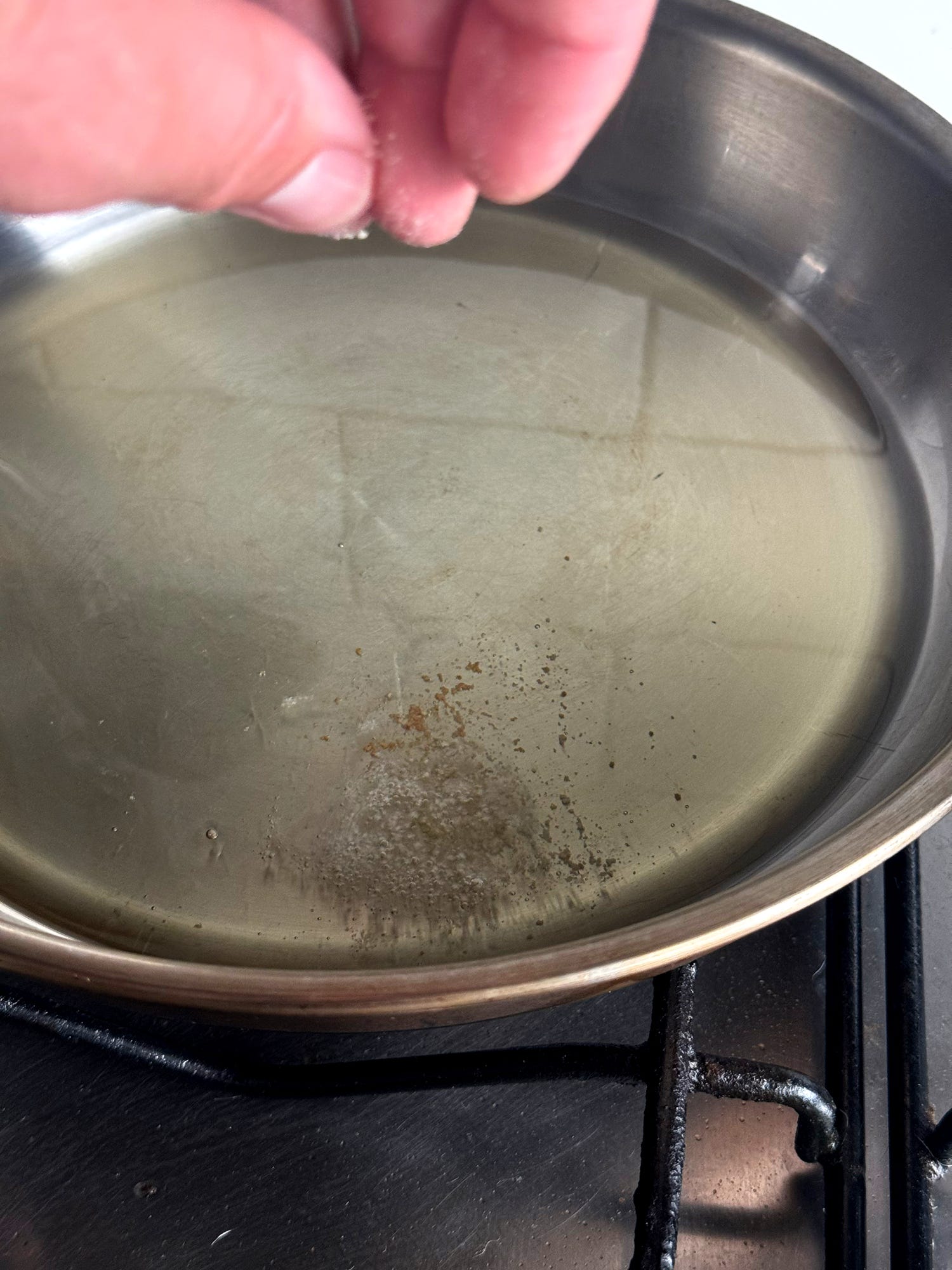
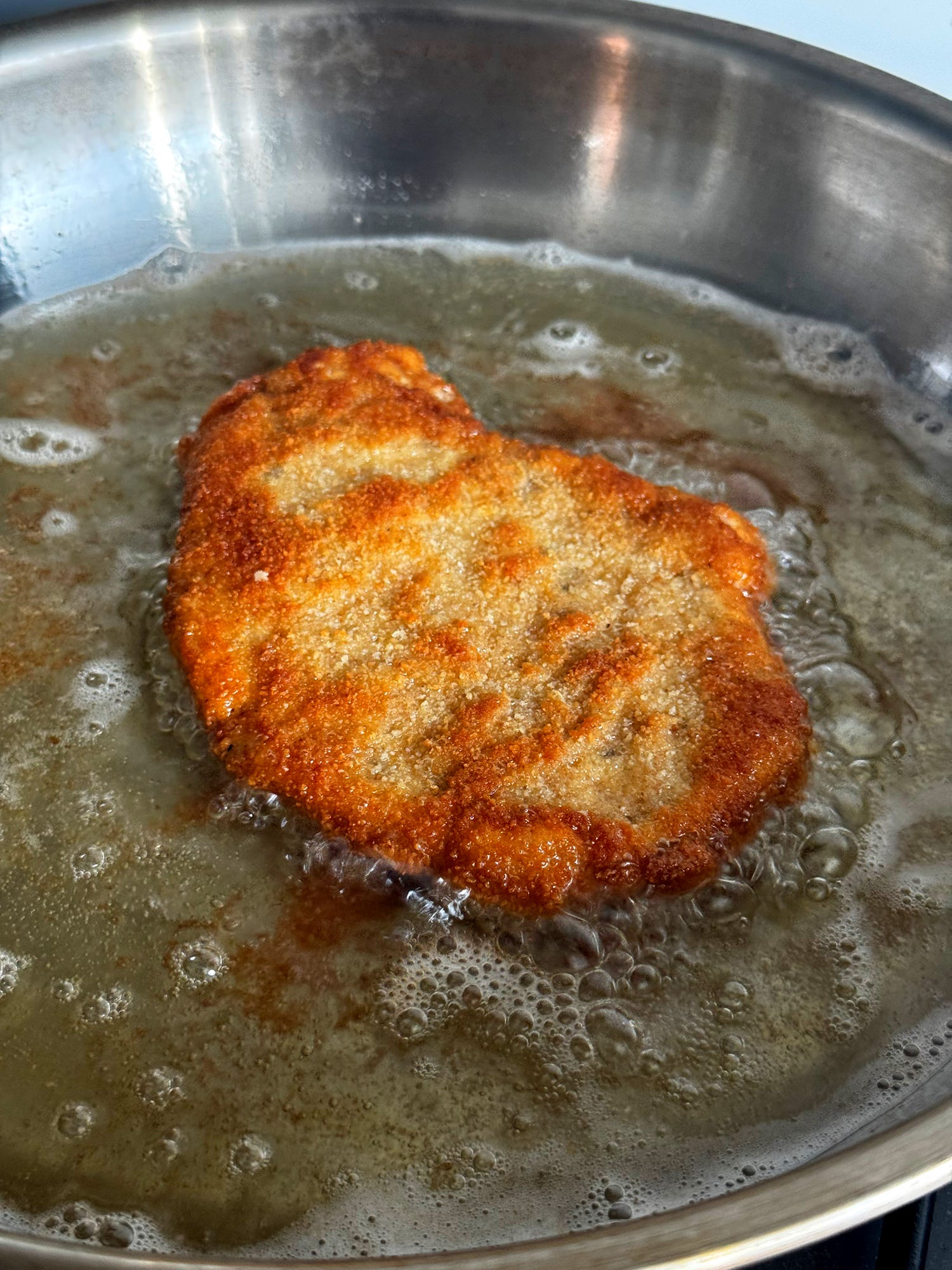
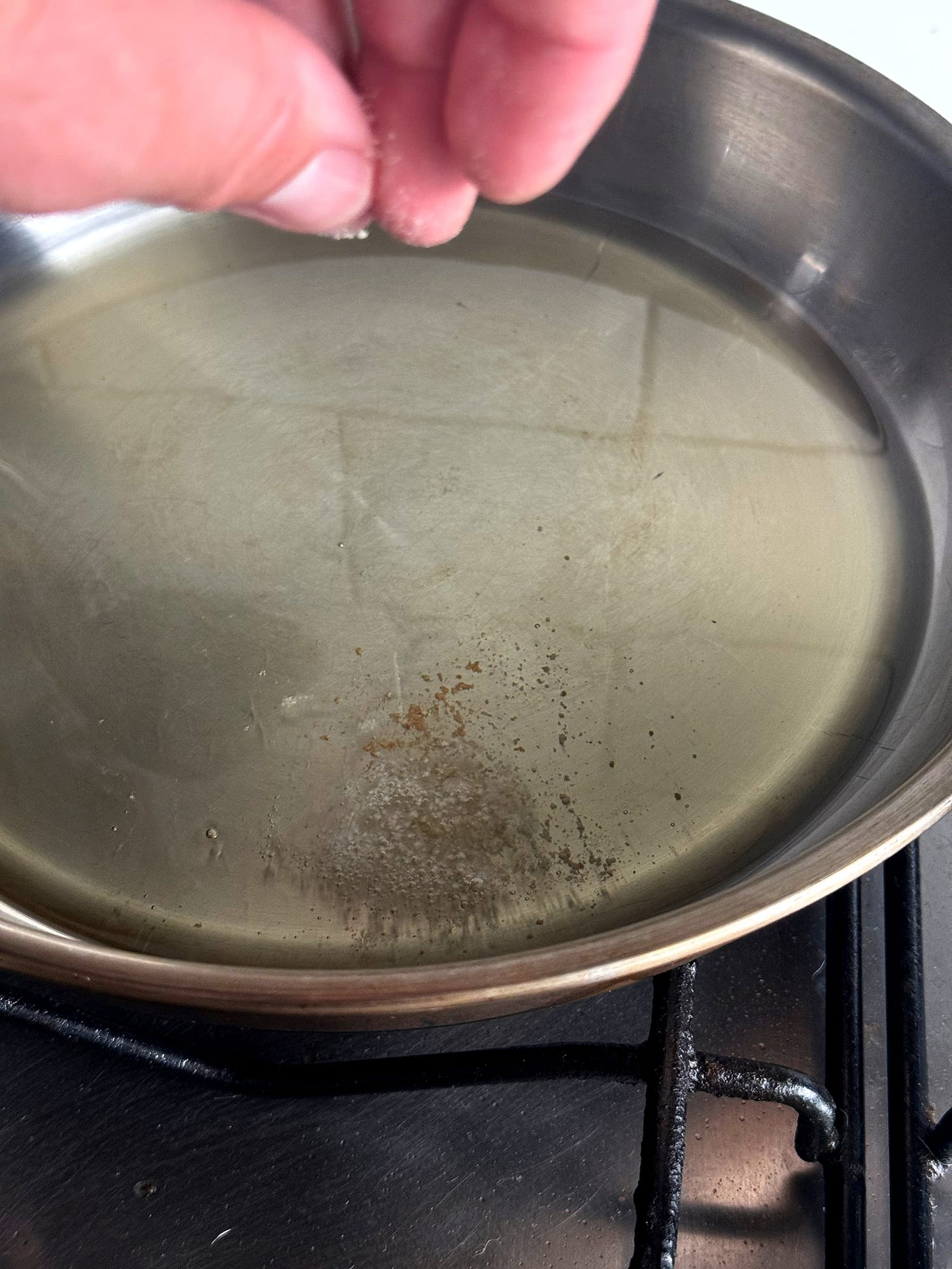
To prepare the frying pan, add the pan to a medium-high heat and add 100ml of cooking oil, or enough to create a 1cm depth of oil across the pan. Allow the oil to heat until a few breadcrumbs sprinkled into the oil sizzle immediately on contact.
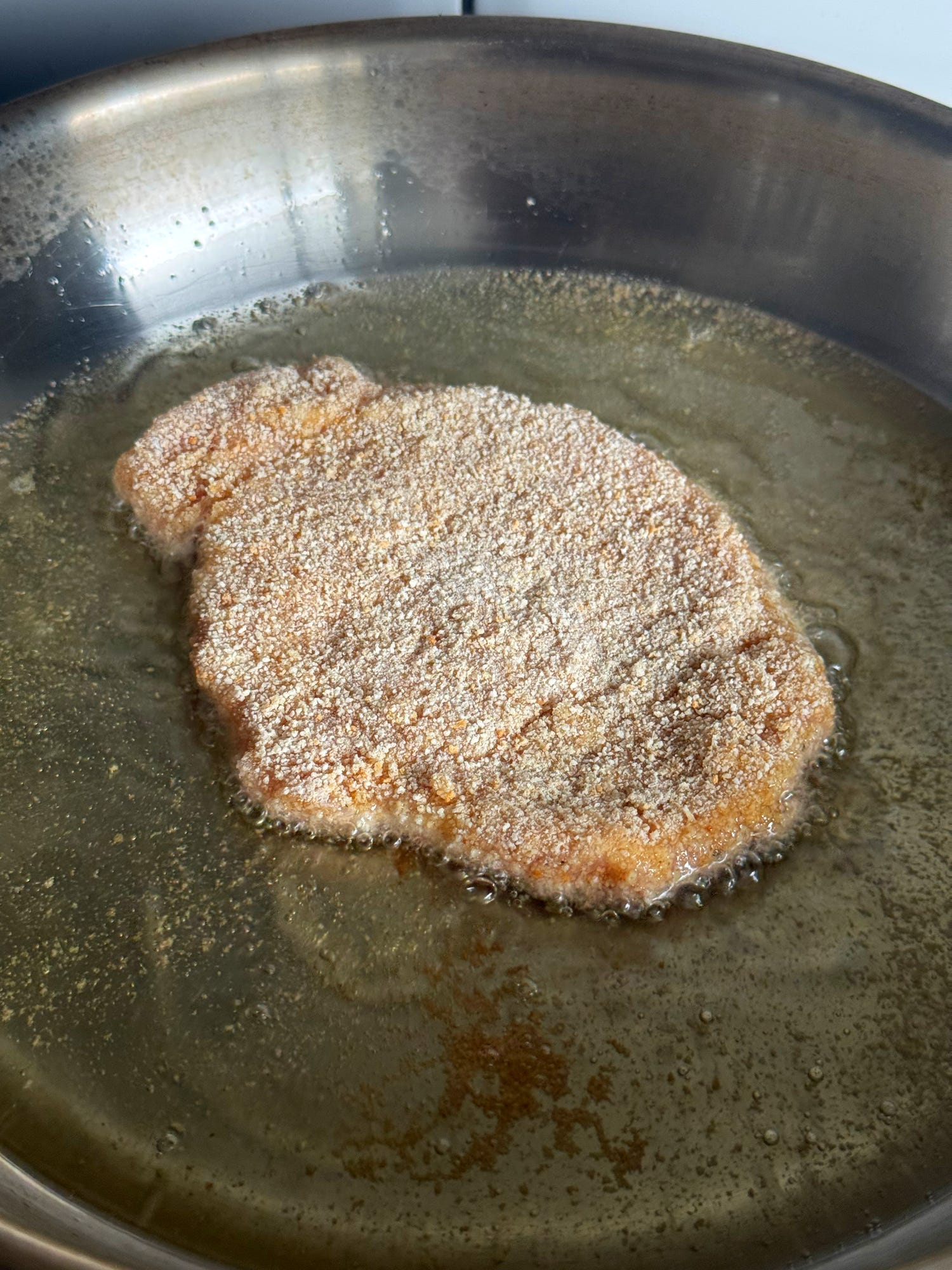
Now let’s fry the schnitzel. Gently take the breaded schnitzel and lay it into the pan. Allow it to fry at medium-high heat for 1 minute 30 seconds, then turn it over and fry for 1 minute 30 seconds on the other side.
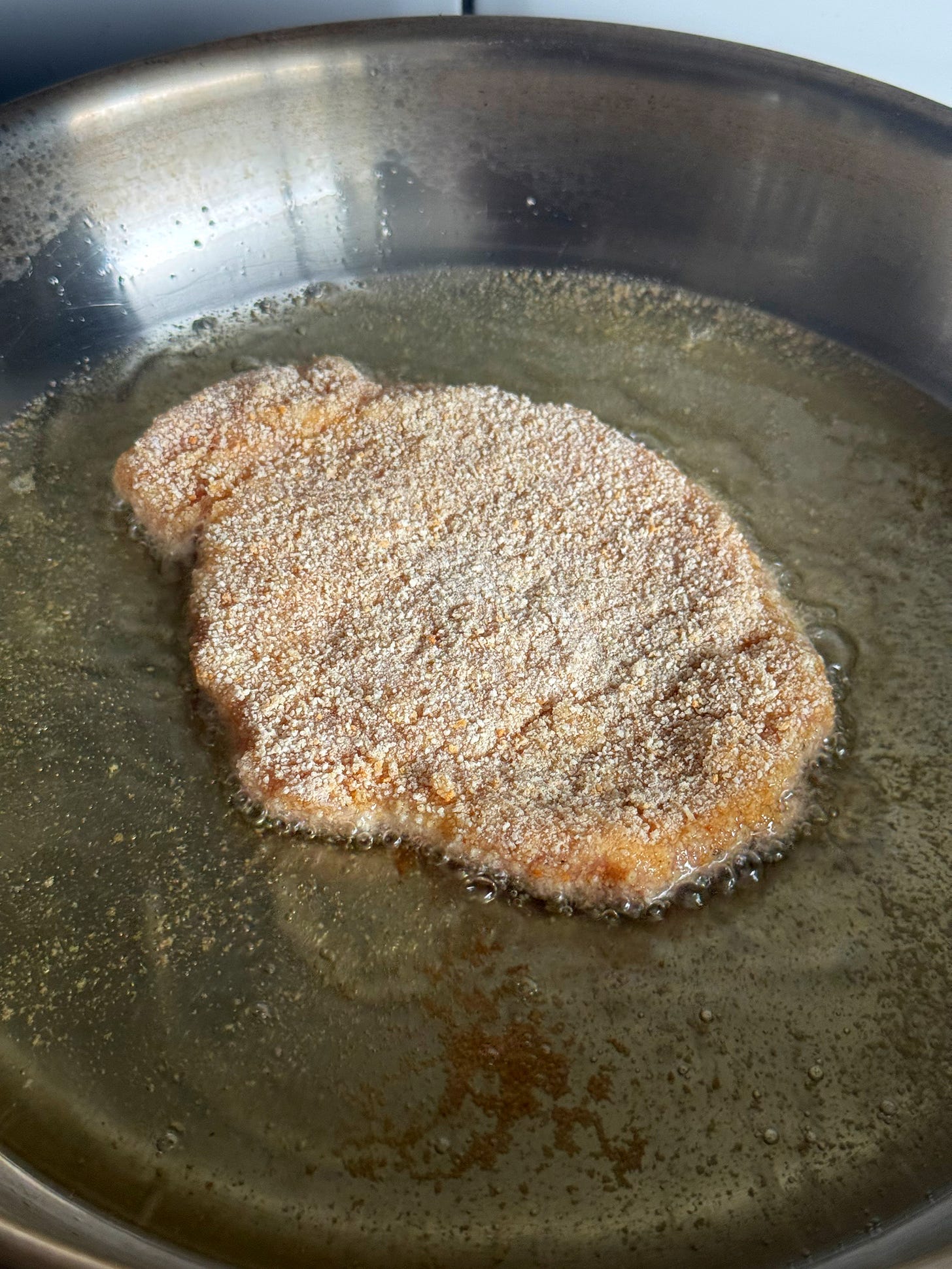
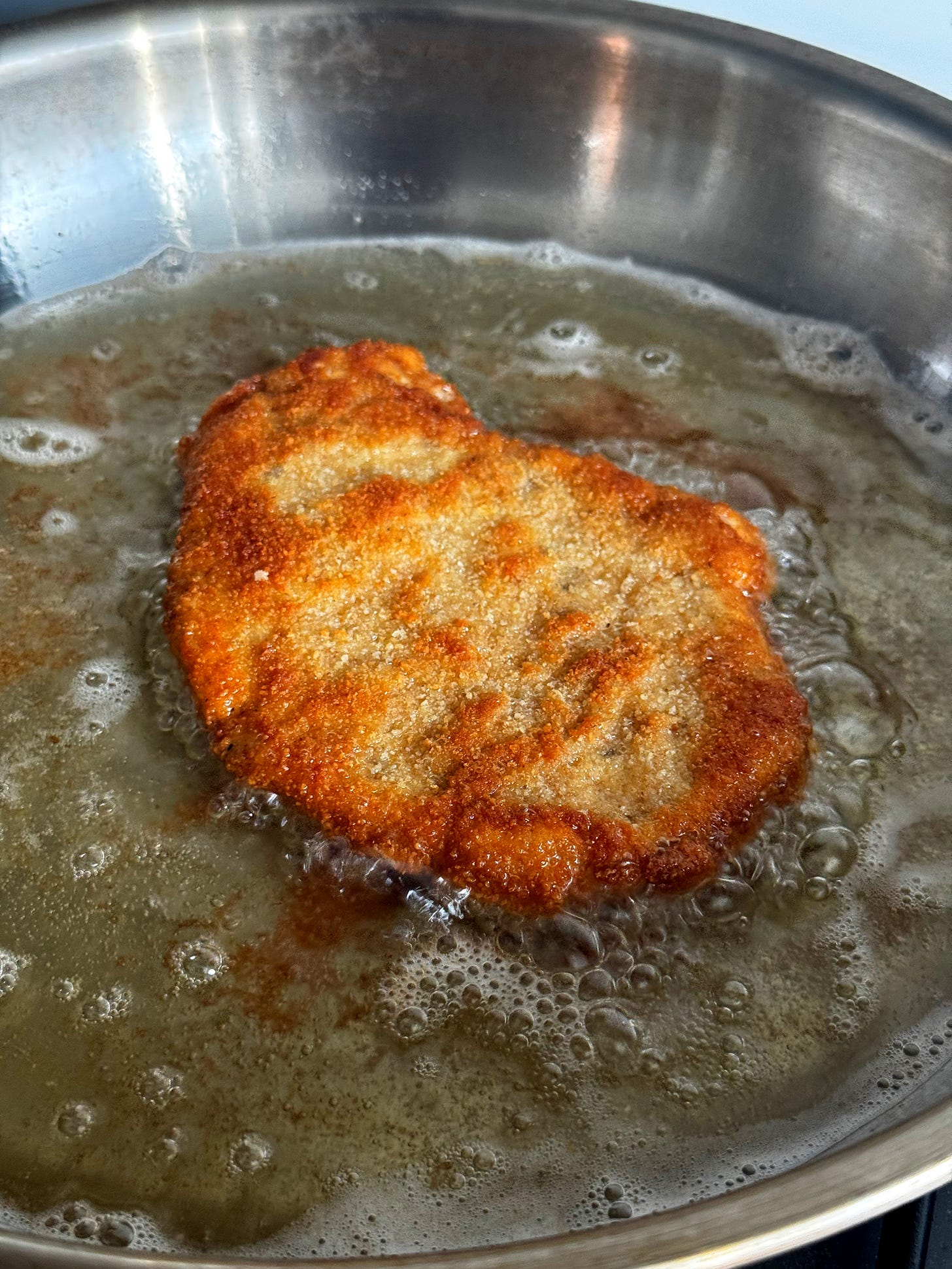
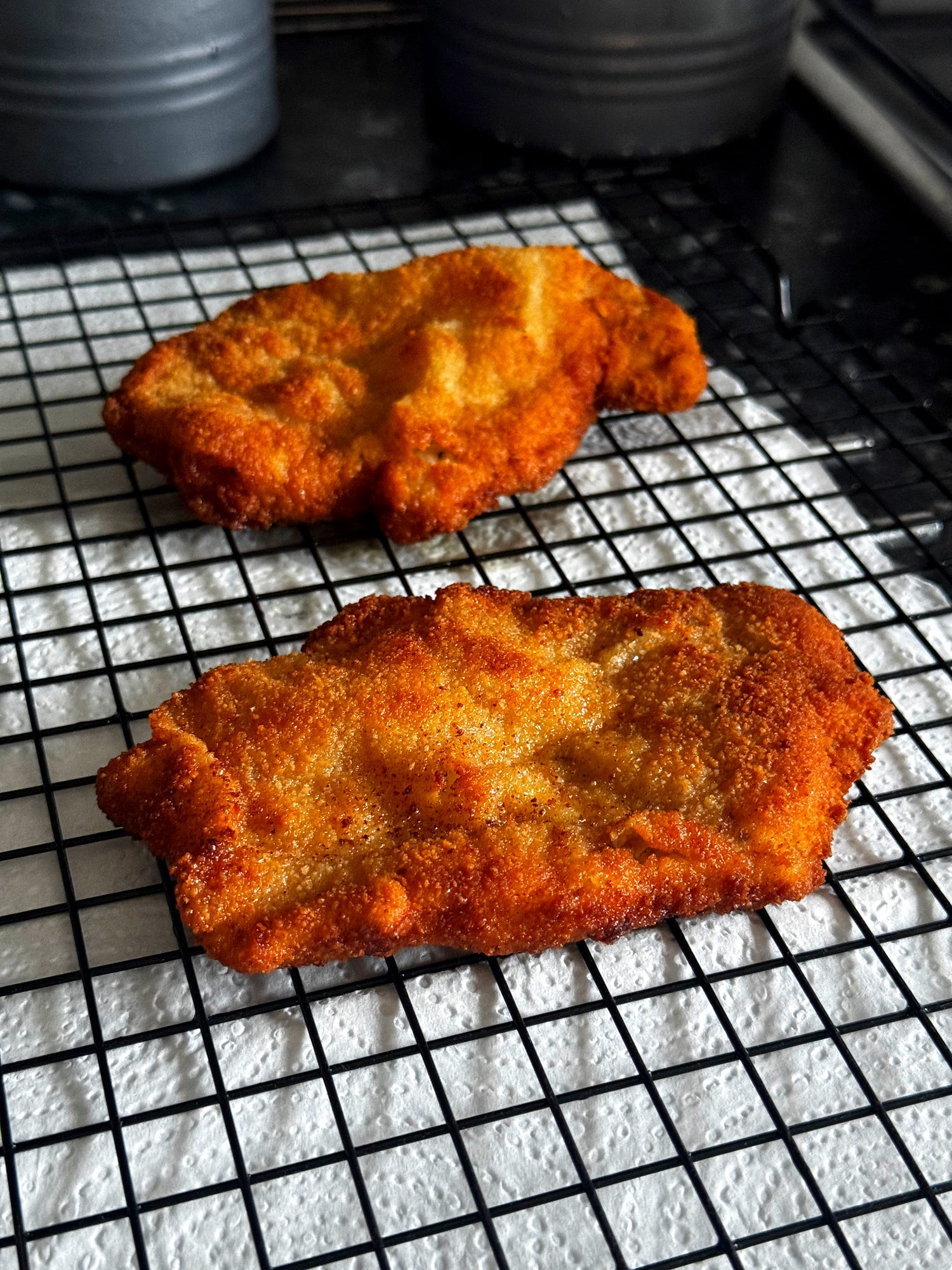
Remove the schnitzel from the pan and allow it to sit on a rack to cool slightly for 1 minute until it crisps up. You should notice some bubbles form in the crust as the meat relaxes.
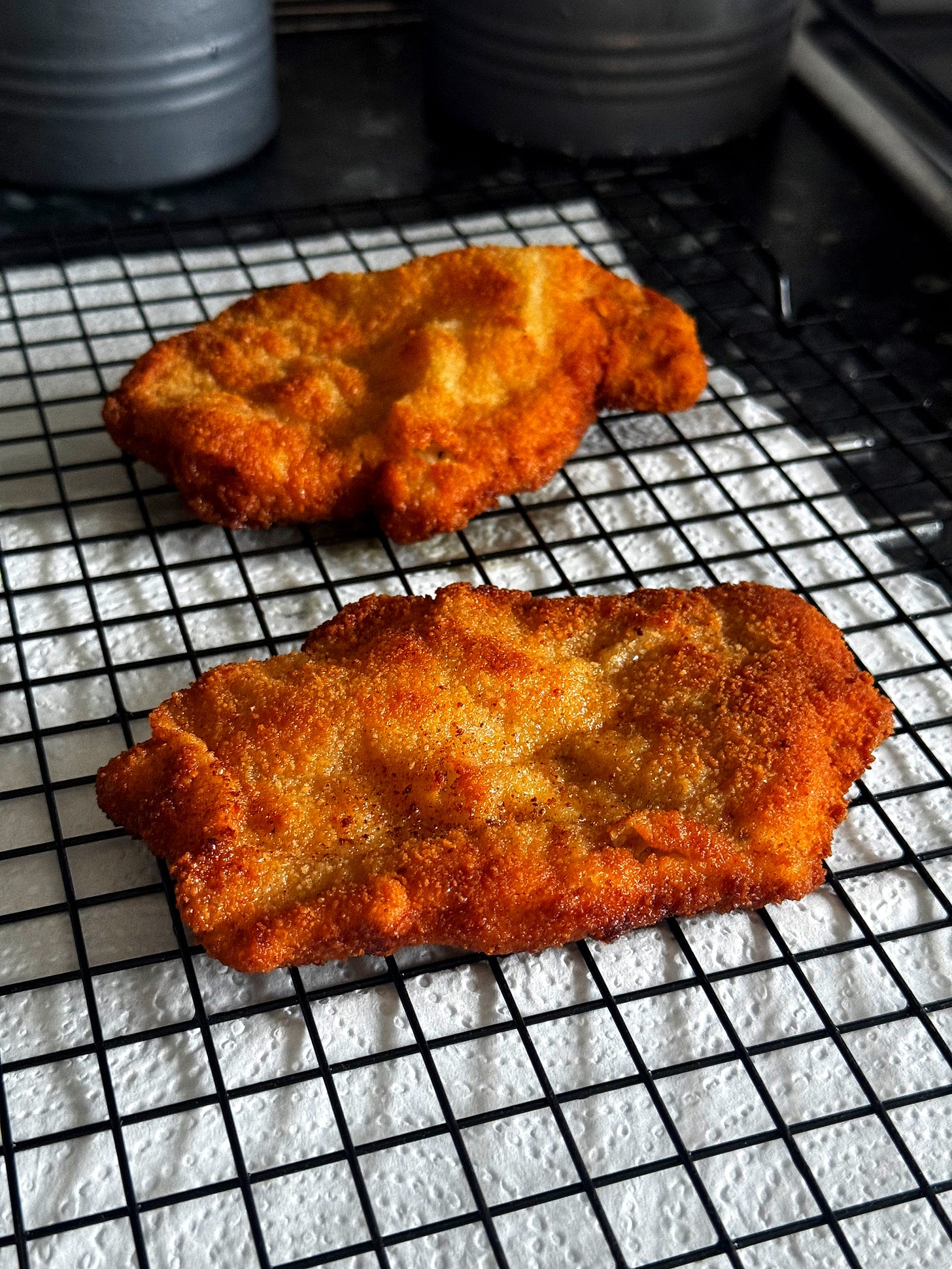
Serve the schnitzel with salad, fries, soured cream and a squeeze or lemon. I highly recommend it with potato salad. Enjoy!